July Ferments: On Kraut, Hot Dogs & Slowing Down
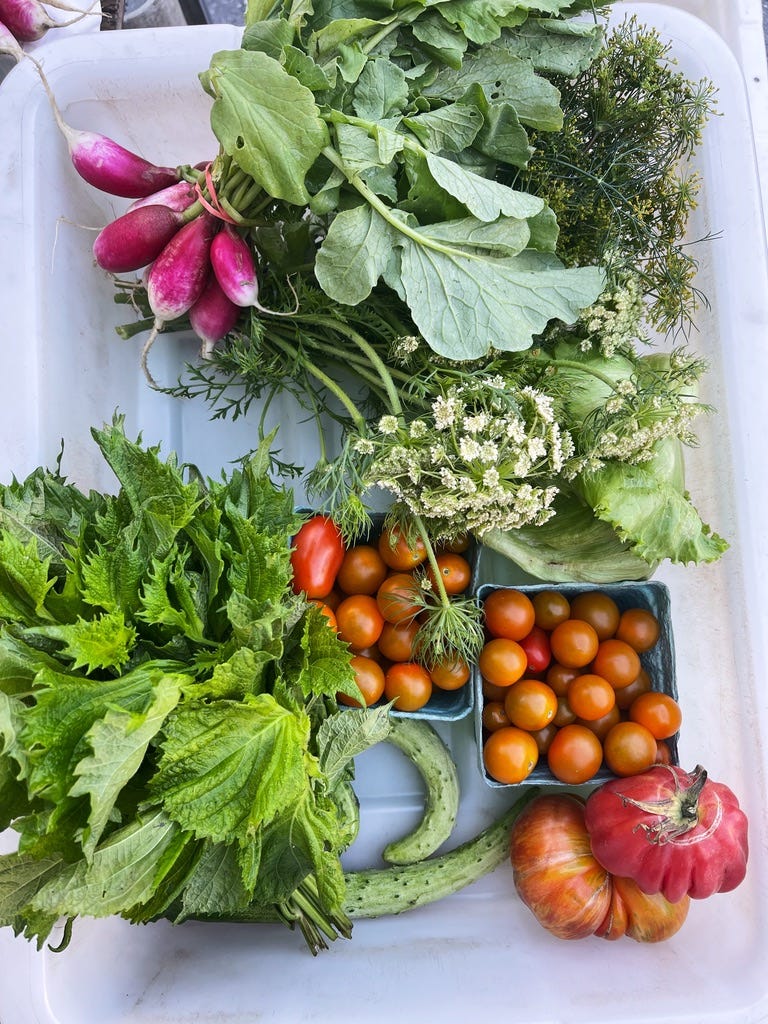
It’s July in New York City, and the Union Square Greenmarket — my local market — is in full bloom. The produce is abundant and peaking. It’s the perfect time to preserve.
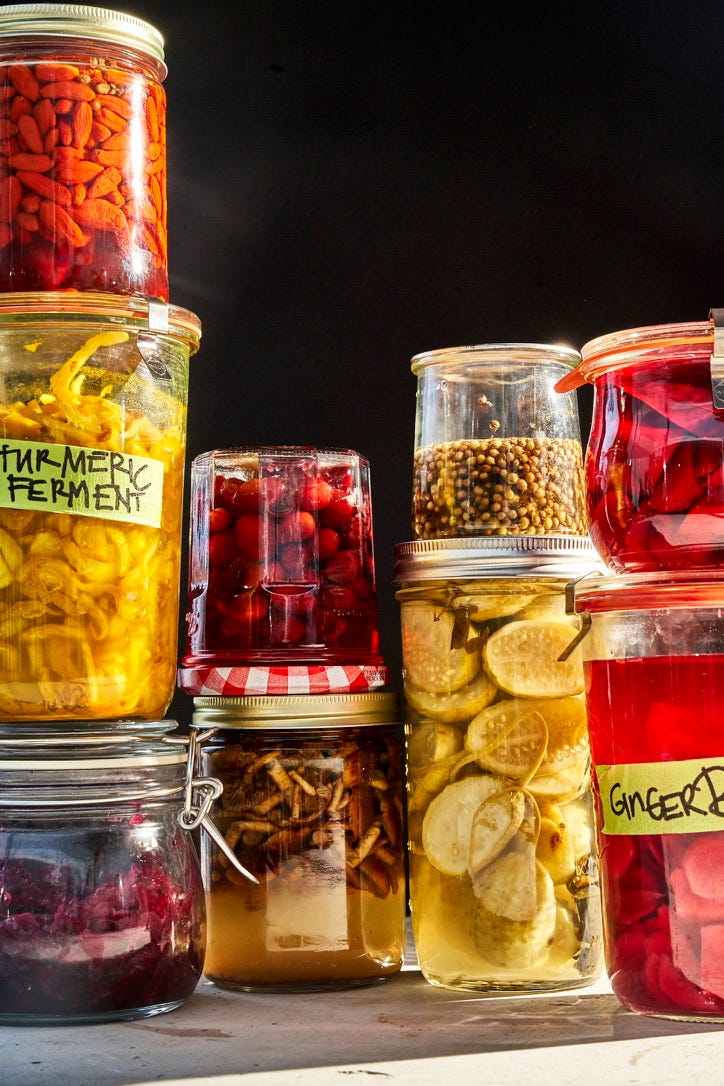
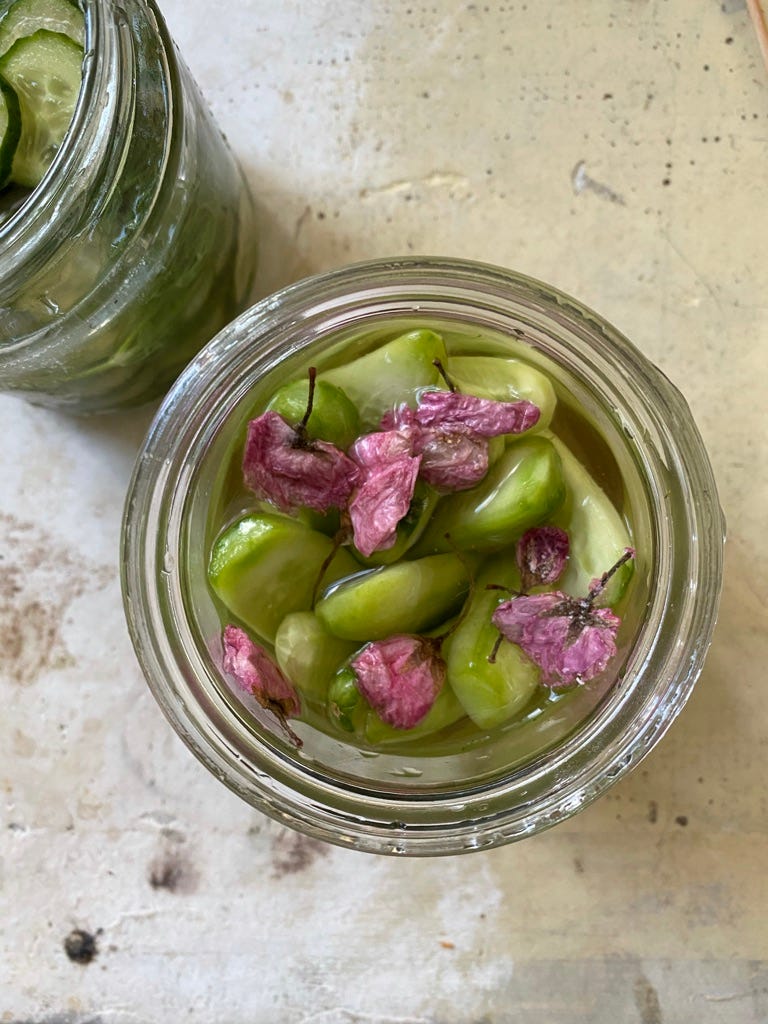
There are two basic ways to go about preserving, stashing for the winter if you will, not including freezing (berries) and drying (herbs for tea or to cook with).
These two are:
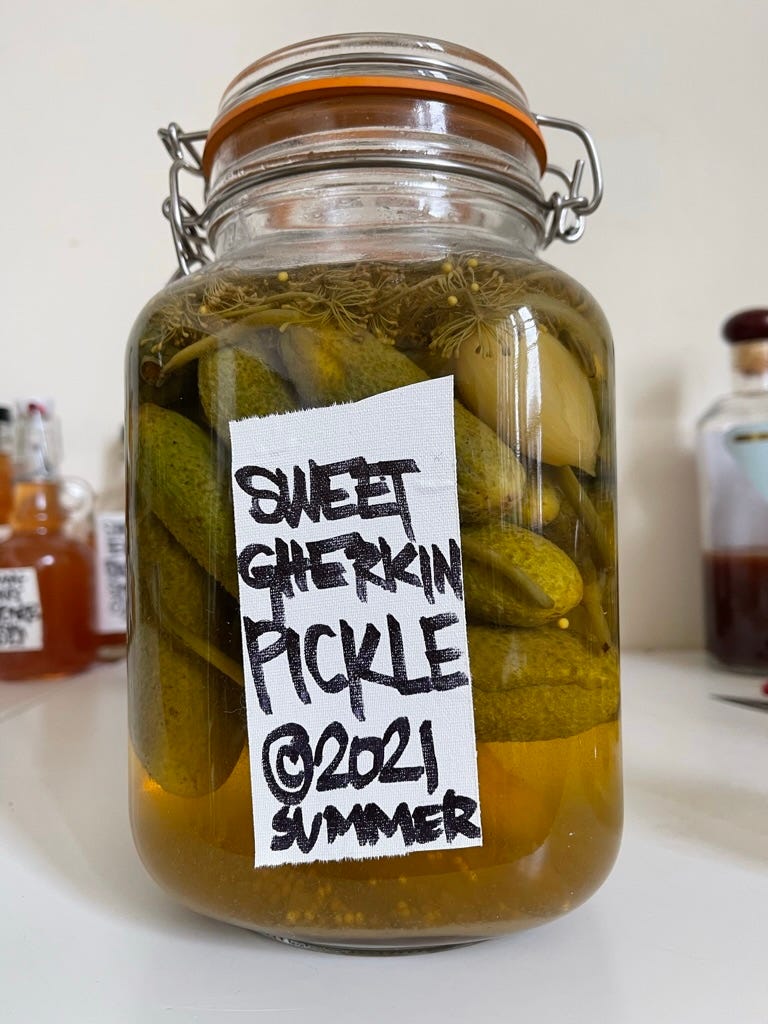
Pickling — fast, easy, and by now, I trust you’ve developed your personal ratio formula, I keep the 1:2:3 ratio, 1 part sugar : 2 part water : 3 parts vinegar then sweeten, make more tart or add water to dilute, depending on your mood, add salt and spice if using.
Fermenting — slow, complex, and layered.
Sure, it’s easy to buy a pint of high quality sauerkraut these days, but those of us who make it at home know: it’s more sustainable, it tastes better because we use our improvisation to cater to our own palate and whim, and there’s another element that matters — it asks us to slow down. To pay attention. To make something that requires care. To make somethings complex from a inexpensive head of cabbage, using the natural bacteria that are always present in the atmosphere to work its magic.
The result? A jar of tangy, probiotic-rich kraut that isn’t just good for your gut — it adds a power punch of flavor. I love it:
Warmed up and topped beautifully on baked tempeh served Reuben style, want the recipe?
Pops on a rice bowl.
Completes a snack plate or party platter.
Belongs — deeply — on a hot dog.
As I write this, it’s July 4th. So of course, I have to mention the classic ferment: sauerkraut on a hot dog.
I love them — but only on very specific occasions. There used to be four. Now there are three.
At the ballpark — Yankee Stadium or Citi Field. I actually love all sports live. Not so much watching it on TV.
On the 4th of July, naturally, hot off a portable charcoal grill on the beach with ketchup.
At Katz’s Delicatessen — their hot dogs are sold in the front window, no line, because everyone’s there for pastrami. They used to be $3, which made them the best deal in town. Now they’re $6. I still go. Get it with the works: mustard, sauerkraut, and those sweet stewed onions. Add a Cel-Ray (celery soda) over ice, and you’re still under $10 — a rarity in NYC.
One place I don’t recommend for hot dogs anymore? Central Park.
It used to be magical — the Carrie Bradshaw moment: a bench in the park, a hot dog, peace in the middle of the big city. That doesnt exsist any longer. Now they serve them raw-ish, still gritty, with dry buns. Worst of all? They put the mustard after the sauerkraut — it slides off, onto your clothes. I had to stop falling for this nostalgia.
Anyway, back to kraut.
New Batch: Sauerkraut with Nigella Seed
I just made a new kraut with nigella seed — sometimes called black seed or kalonji. It comes from the onion family, and has a savory, distinctive flavor that’s surprisingly lovely in fermented cabbage.
It’s also steeped in meaning: Prophet Muhammad is said to have described it as the seed that cures everything but death. Whether you’re spiritual or not, that’s the kind of folklore that makes an ingredient one I want to use.
Try it. It’s earthy, aromatic, and full of soul.
Let’s Ferment
Fermentation is preservation, its a transformation, and takes care — and in the summer, it’s one of the best ways to make the most of produce. Cabbage is a classic, a forgiving starting point. Once you get the hang of it, it’s easy to riff, swap, and experiment.
Here’s my go-to kraut formula:
Basic Sauerkraut Recipe with Nigella
Ingredients
1 medium cabbage (about 2½–3 lbs), green or red
1½ tablespoons sea salt or kosher salt (2% salt by weight)
2 teaspoons nigella seed OR o
ptional spices: caraway, fennel, mustard seed, chili flake
Optional: a few outer cabbage leaves reserved for packing
Instructions
Shred the cabbage finely using a knife, mandolin, or food processor.
Massage the salt into the cabbage in a large bowl until it softens and releases liquid (5–10 minutes).
Add nigella if using, or other seeds (cumin, coriander or fennel seed, a little goes a long way or flavor it with sliced white onion or halved whole garlic cloves, then pack the cabbage tightly into a clean jar or crock, pressing down firmly until the brine rises above the cabbage.
Weigh it down using a fermentation weight, a smaller jar, or a clean rock. Cover with a cloth and hold it down with a rubber band.
Ferment at room temperature for 3–7 days. Check each day, the liquid it releases should cover the cabbage by the start of 2, if not press the cabbage every few hours repeating the process until until submerged. Taste daily after day 3. Once it’s tangy to your liking, move to the fridge.
Keeps for months. Flavor deepens with time.
Homework
Try fermenting cabbage from the Ferment Master Recipe adding some of your favorite flavor profiles or Turmeric, Fennel, and Onion ferment recipe on page 79.
Next week we’ll discuss cures and sweet ferments from the same chapter.
Share your tips, questions or hot dog confessions in the comments. And if you’re new here — subscribe for more notes on cooking from a place of improvisation.